
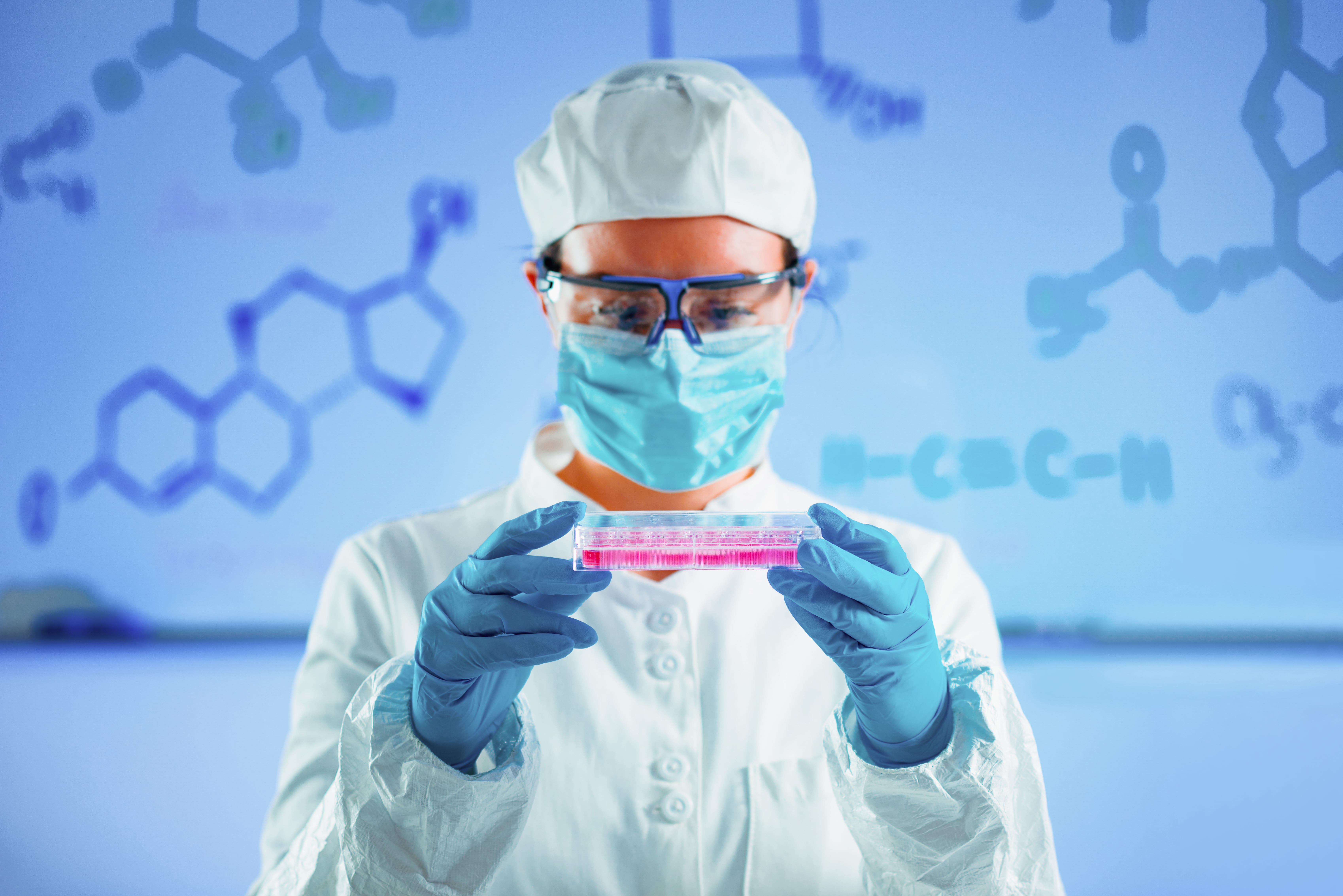
Moreover, one of the most recent innovations in this area is the use of the S.O.N.G. Laser, developed by Dr. Todd Ovokaitys, which represents a significant advancement in the activation of VSEL stem cells.
Regenerative medicine is moving very rapidly towards clinical acceptance for a variety of conditions, and VSEL stem cells activated by the S.O.N.G. Laser are leading the way.
Stem Cells: Pillars of Our Health
Our daily healthy lives entirely depend on stem cells. If they fail in some way, they can result in serious and even fatal diseases.
The most studied stem cell is found in the bone marrow and is crucial for the daily production of blood cells.
Another good example is the skin’s stem cells, which repair daily “wear and tear” and can be seen in action when they “magically” heal wounds on the skin.
A scar, for example, may result from large wounds, but the skin repair process is nevertheless extremely impressive.
Regenerative Medicine: An Evolving Field
As a professor in this field, I have observed the successful use of bone marrow stem cells in treating blood disorders like leukemia. This is the oldest example of Regenerative Medicine, a fact that is proven and tested.
Moreover, bone marrow stem cell transplantation to treat blood disorders is now routine clinical practice worldwide.
VSEL Stem Cells: Not Embryonic
VSEL stem cells, meanwhile, are fascinating due to their tiny size (approximately 2 to 4 millionths of a meter in diameter), allowing them to access all parts of the body.
In contrast, there are other stem cells for therapeutic use and clinical trial, but they are so physically large that when administered intravenously most of them get stuck in the lungs.
Although VSEL stem cells are similar to embryonic (ESC) in some surface properties, this does not mean they are ESC.
VSEL stem cells carry some molecules on the cell surface that are similar to embryonic stem cells. The key message here is that VSEL stem cells are not embryonic stem cells.
Capability of VSEL Stem Cells
VSEL stem cells can produce every type of tissue, which makes them ideal candidates for regenerative treatments; in theory, they can be used to treat any disease.
VSEL Stem Cells: Very Easy to Obtain
One of the main places where VSEL stem cells are found is in the bloodstream, making it very easy to obtain some VSEL stem cells by taking a simple blood sample.
Activation of VSEL Stem Cells by S.O.N.G. Laser
The S.O.N.G. Laser is a safe and effective method to activate VSEL stem cells extracted from the blood and may be able to “guide” these cells to the treatment site, known as “relocation”.
This harmless and highly specialized laser “activates” the VSEL stem cells so that they become biologically active for effective treatments.
We have already conducted considerable clinical research on the S.O.N.G. Laser using it on VSEL stem cells obtained from human blood.
The ease of obtaining these cells from the blood and reintroducing them to the patient after laser treatment is a notable advantage.
The laser “activates” the VSEL stem cells in such a way that when the VSEL stem cells treated with the S.O.N.G. Laser are returned to the patient, they are biologically active and have shown great benefits for some patients.
Interestingly, the VSEL stem cells are obtained from the patient through a simple blood extraction, which is treated with the S.O.N.G. Laser and then returned to the same patient.
Clinical Implications and Future Applications of VSELs
The use of VSELs activated by S.O.N.G. Laser technology has shown promising results in regenerative medicine research and clinical observations involving conditions such as end-stage heart failure, neurological disorders including Alzheimer’s disease, dementia, and stroke, traumatic injuries affecting the spinal cord and brain, as well as metabolic conditions such as type 2 diabetes.
In addition, the potential applications of VSELs in longevity medicine, fertility support, soft tissue regeneration, and healthy aging continue to be actively investigated. Researchers are also exploring how activated VSELs may contribute to tissue repair, cellular regeneration, and skin rejuvenation. While early findings are encouraging, further clinical studies are needed to better understand the long-term benefits, mechanisms of action, and future therapeutic applications of VSELs in regenerative medicine.
Longevity or Healthy Aging
VSEL stem cells activated by S.O.N.G. Laser may reduce biological age. Some people suggest that therapy with these cells can result in the repair or rejuvenation of the skin. However, much more work is needed to confirm this claim.
Indeed, the mechanism of action in this particular is not yet understood, but it may be that VSEL stem cells activated by S.O.N.G. Laser modulate age-related changes in our DNA.
Regarding fertility, stem cells activated by the S.O.N.G. Laser may be useful in both male and female infertility.
It is possible that the regeneration of soft tissues, including cartilage, ligaments, and tendons, may be possible through therapy with VSEL stem cells activated by the S.O.N.G. Laser.
This may be useful for older individuals and athletes who may have suffered joint or soft tissue injuries.
VSEL Stem Cells: A Realistic Future
Regenerative medicine is advancing rapidly toward clinical acceptance for various conditions, and VSEL stem cells are at the forefront of this progress.
We are on the threshold of an era where the regenerative and repair capacity of our own body can be enhanced and utilized like never before.
At Xtend Optimal Health, we are proud to offer this treatment of VSEL stem cells activated by S.O.N.G. Laser as part of our regenerative protocols, along with many other procedures to help patients achieve optimal health. If you are interested or need more information, please consult one of our medical coordinators or schedule an appointment.
Peter was trained at the University of Cambridge under the supervision of the IVF co-inventor and Nobel Prize winner, Professor Sir Bob Edwards FRS. His Ph.D. was in stem cell technology with a focus on the transplantation of stem cells from the developing mouse fetus.
His postdoctoral position was as a Senior Embryologist at the Bourn Hall Clinic, which was the world’s first IVF clinic.
Peter has been the scientific director of Cells for Life in Toronto and Smart Cells in the UK and was appointed by the HTA for Smart Cells.
He has conducted research and clinical practice in stem cell technology and IVF and has written numerous articles and book chapters on stem cell technology and IVF.
He has also been a guest speaker at many international conferences, including personal invitations to speak twice at the Vatican, the UK House of Lords, and the Canadian Parliament.
In addition, he has experience in creating new stem cell technology and IVF laboratories and the related accreditation and regulatory aspects of stem cell and IVF laboratories.
He was the scientific director of the global stem cell services company WideCells Group PLC and director of quality at the Fertility and Gynecology Academy in London.
Currently, he works as an independent clinical scientific consultant on assisted reproduction and regenerative medicine projects.
He has written a book on stem cell technology for the general public titled “The Promise of Regeneration,” which was published in December 2020. This is the first in a series of books on medical science. His second book, ‘The Promise of Fertility,’ was published in 2021 and is an explanation of IVF and assisted reproduction for the general reader.
Frequently Asked Questions About VSELs
What are VSELs?
VSELs, or Very Small Embryonic-Like Stem Cells, are a rare type of stem cell naturally found in the body. They are being studied for their potential role in cellular repair, regeneration, and healthy aging.
Are VSELs the same as embryonic stem cells?
No. VSELs may share certain embryonic-like characteristics, but they are not embryonic stem cells. They are found in adult tissues and can be obtained from the patient’s own body.
How are VSELs collected?
VSELs can be obtained from a blood sample, making the process less invasive than other stem cell collection methods that may require bone marrow or donor tissue.
What are VSELs being studied for?
VSELs are being studied in regenerative medicine for their potential role in tissue repair, neurological support, cardiovascular health, fertility, soft tissue regeneration, longevity, and healthy aging.
How does S.O.N.G. Laser technology work with VSELs?
S.O.N.G. Laser technology is designed to activate VSELs obtained from the patient’s blood. Once activated, these cells are reintroduced into the body as part of a regenerative medicine protocol under medical supervision.
Are VSELs used for longevity and healthy aging?
VSELs are being investigated for their potential role in supporting cellular repair and healthy aging. While research is still evolving, they are an area of growing interest in longevity and regenerative medicine.


